UConnPRSI Corner

September 30, 2026

Contributed by Charles R. Venator Santiago


A History of the Puerto Rican Day Parades in Connecticut

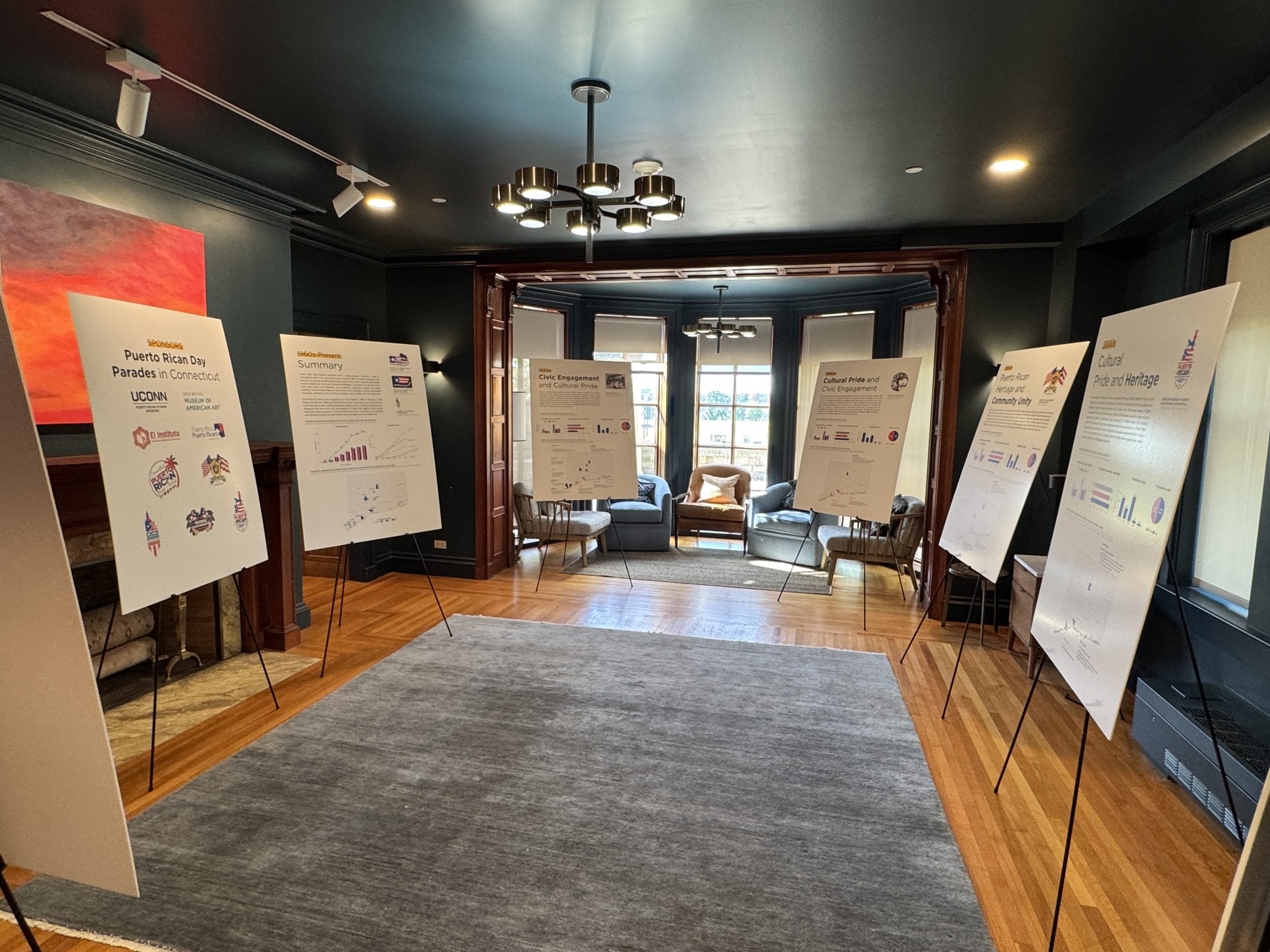
Graduate student, Jhinia Garcia, and Professor Charles R. Venator-Santiago recently completed a mobile gallery on the history of the Puerto Rican Day Parades in Connecticut. This gallery consists of a series of panels/posters, a short video collecting oral histories of key leaders of the Puerto Rican Day Parades in Connecticut, and a detailed report. The exhibit will be available at the New Britain Museum of American Art and is available to share with schools, museums, libraries and other public spaces. This is part of a series of community education projects sponsored by the UConn Puerto Rican Studies Initiative. For more information, please contact charles.venator@uconn.edu.

A room featuring multiple posters on the walls, showcasing various artistic designs and vibrant colors.

Robert G. Mead Jr. Lecture Announces Featured Guest Speaker

Contributed by Charles R. Venator Santiago

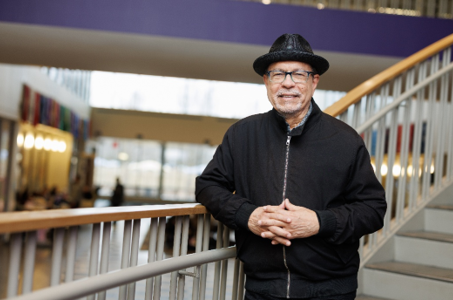
Professor Jose Cruz wearing a hat and jacket stands confidently on a stairway, looking straight with a slight smile.

This year’s Robert G. Mead Jr. Lecture will be provided by Professor José E. Cruz on Tuesday, October 27, from 4:00-6:00pm. Professor Cruz is Professor Emeritus of political science at the University at Albany, State University of New York. Professor Cruz’ talk will focus on his latest book, Puerto Rican Radicalism in the United States, 1960-1990: Training for Political Incorporation traces the trajectory of Puerto Rican radicalism in the United States from 1960 to 1990 and suggests that radicalism was a school for the conventional politics of radicals-cum-progressives. The book examines the radical movement as a whole through an extensive examination of primary and secondary sources. It challenges the view that Puerto Rican radical politics provided the foundation for conventional politics within the broader community. The book looks at radicalism in its relationship with Puerto Rican conventional politics and in the context of North American radicalism. It proposes a new conceptualization of its connection to Puerto Rico, examines the connections between Puerto Ricans, Blacks, Native Americans and Chicanos, and demystifies the role of repression and of groups like the Young Lords. In this talk, Professor Cruz will highlight the accomplishments of radicals and will assess the prospects for radicalism in the process of bridging the gap between democratic promise and performance. More information will be forthcoming.

Mahan Fellow Trains at Voces Oral History Center

Contributed by Julien Torrento


As a Mahan fellow, I participated in the summer institute at the Voces Oral History Center at the University of Texas at Austin, the leading Latino oral history archive in the United States. Through this fellowship-funded research, I received training in oral history methodology as well as the standards and practices that guide oral histories within the broader research community. The experience provided me with methodological tools that have expanded how I understand my own research on embodiment, identity formation, and cuir experience.

One of the most significant outcomes of my fellowship is developing a deeper understanding of oral history as a form of memory work. Oral history differs from other forms of historical research in its attention to orality, sound, narrative form, subjectivity, and the ways memory changes over time. The value of oral testimony does not solely depend on its adherence to factual accuracy, rather, the ways people remember, interpret, or narrate their experiences can reveal forms of knowledge that conventional historical records may not capture. I also learned the importance of the intersubjective relationship between interviewer and interviewee. Oral history is dependent upon relationship building, patience, and time, with new questions and interpretations often emerging through each interview experience. This approach has encouraged me to think more carefully about how histories are constructed and about the relationships through which knowledge is produced.

This training has directly enriched my current research on Roque Salas Rivera’s Algarabia. My work examines embodiment and identity formation through lived experiences within the cuir community. In Algarabía, Cenex, the epic hero, struggles to establish a name, body and stable home while navigating institutions that are against him doing so. The poem’s relationship to oral tradition is particularly significant to my research because Salas Rivera draws upon the epic poem, a form traditionally meant to be spoken and passed on through oral tradition. This raises questions about how stories, histories, and identities are transmitted when they move between oral and written forms.

Although the form Salas Rivera presents is a written literary text, this relationship between reader and narrator can resemble the intersubjective relationship between interviewer and interviewee: the narrative is not delivered as a complete or objective history, but is constructed through an encounter with fragments, voices, and materials that require interpretation. Salas Rivera combines the poem with art, quotations, court rulings, and other forms of documentation, creating a complex process of establishing and reconstructing a narrative. This complexity resonates with a central question in my research: what does it mean to search for where you are from, particularly from a positionality shaped by institutional power and an unstable relationship to identity? Rather than providing a singular origin story, Algarabía demonstrates how histories and identities can be assembled through encounters with archives, testimony, memory, and other people’s accounts.

The Mahan Fellowship has consequently expanded both the scope and methodology of my research. My training at the Voces Oral History Center has given me a stronger foundation for placing literary analysis into conversation with oral histories and for attending to the relationships between narrative, memory, embodiment, and history. Moving forward, I hope to continue bringing oral testimony into conversation with literary texts, particularly in examining how trans and cuir communities narrate, preserve, and create meaning around experiences of identity, embodiment, and belonging. The fellowship has provided me not only with new research skills, but with a methodological framework for understanding storytelling itself as a process through which histories and identities are continually constructed.
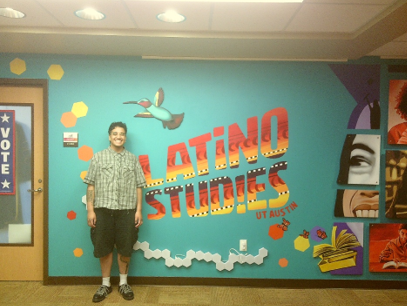
Graduate student, Julien, stands in front of a vibrant Latino studies mural from UT Austin, showcasing cultural themes and artistic expression.


Elizabeth Mahan Fellow Conducts Research in Brazil

Contributed by Beatriz Torres do Nascimento


“From Brazil to the U.S.: The Reconfiguration of Privilege and Racial Identity Among Brazilian Immigrants”, is my graduate research project at UConn. My research investigates how the myth of racial democracy—an identity deeply rooted in the formation of Brazilian society—shapes the experiences of Brazilian immigrants when they arrive in the United States, where racialization and its distinctions appear in much more visible and explicit ways. With this in mind, my research contextualizes the myth of racial democracy in Brazil and reflects on the different experiences of Brazilian immigrants based on skin color. This includes immigrants who were already aware of Brazil’s racial issues, although racism there manifests in more subtle ways than in the U.S., as well as immigrants who considered themselves white in Brazil but, upon arriving here, lose part of the privileges granted by the “Whiteness Pact.”

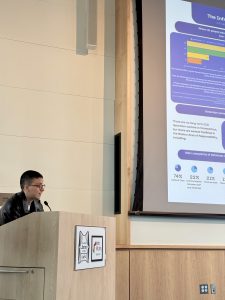
Graduate student presents at a podium, engaging with the audience during a formal event.I am very grateful for having received the Elizabeth Mahan Fellowship this summer, because without it, it would not have been possible to do my field research in Governador Valadares, since the city is in a different state than my family lives in Brazil. During my ethnographic work, I was able to connect a lot with the local culture, beyond only with the interviewees. It was interesting to see in practice what I had been reading about how the city of Valadares operates from a culture completely influenced by the USA and the people from there who emigrated, their families and also by the returners. Although I ended up interviewing two participants less than planned (one less immigrant in Massachusetts and, consequently, one less family member in Brazil), due to the long wait I had until I got the IRB (I ended up getting the IRB authorization when I was already close to boarding for Brazil), so I had much less time to get participants in Massachusetts, I believe that the findings were not affected by this. In addition to the participants and their family members forming a diverse group, capable of representing different realities, in the remaining time I was in Valadares, I made important field notes and also interviewed more people than planned.
First, I was able to meet with Prof. Sueli Siqueira, main researcher in the area and internationally recognized, where she received me in her office and shared a lot with me. In addition, I also met a therapist who works on a project that serves returners, another researcher in the area, and also a representative of a cooperative that also seeks to help returners. Therefore, the money I was going to use with the missing participant, I used to get around for these other interviews, in addition to buying food for when I went to a participant’s house.

Finally, I would like to highlight that in addition to the results that this fieldwork generated for my research, the best part was having connected with incredible people who opened the doors of their homes for me. As was the case of a participant’s grandma, who invited me to Sunday lunch with her whole family.

From Coup to Constitution: Mahan Fellow Researches Political Change in Honduras

Contributed by Adrian Chavarria

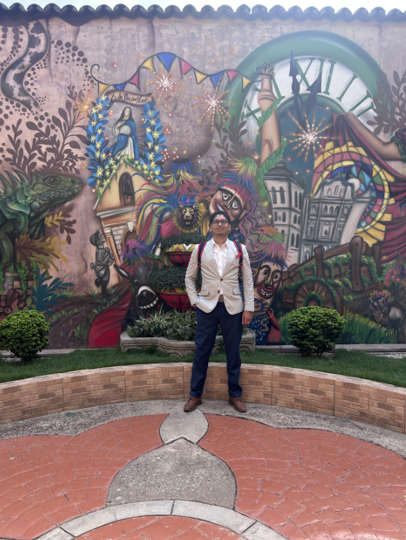
A man stands in front of a colorful mural, showcasing vibrant artwork and intricate designs.

My original research question, which guided my summer research trip supported by the Elizabeth Mahan Fellowship, was: How did the city—the media, municipal government, and the constituency of the city of Comayagua—react to the military coup of April 22nd 1975? Was this reaction different to how it responded to the re-establishment of democratic order through the new constitution adopted by the National Congress on January 11, 1982? Did these particular entities celebrate, endorse, or protest these democratic changes? Having dedicated time to searching for documents in digitized archives and titles in university databases, and having consulted with staff familiar with the Museums in Comayagua and the municipal library,  I was confident that there was information regarding these events only available there. I was right, I found two books that will be especially helpful in analyzing these events. The first book is titled Historia de Honduras (2005) written by Professor Guillermo Varela Osorio, the second one, Evolucion Historica de Honduras by Longino Becerra (2006). Together, they detail the military and civilian governments of the 1970s and the 1980s, their policies, and their oppositions, the military coup of 1975, and the passage of a new constitution in 1982.

There is one important detail that is not found in these titles: how municipal authorities in Comayagua, its citizens, or press reacted to these events. I consulted with staff at the Municipal Library, the Municipality’s Public Relations office, as well as historical museums without success. I found it astounding that the city with the best historical conservation efforts in the nation had not archived any of this information. I consulted with professors in the area and they all told me the same thing: historically, this had been a conservative city, there had not been protests or social movements. In fact, municipalities existed in subordinate positions to the national government and did not have the option to agree or disagree with its actions or policies, especially during the military rule period prior to 1982.

Until 1880 this was the capital of the country, but due to the city’s distance from the current capital and political activities, this time period is absent from the historical record. There are no public communications archived, a record of laws passed by the municipality during this time, newspapers, recorded protests or political actions by citizens, etc. It is almost as if these two events never occurred in the city. This has forced me to ask a different research question: To what extent did the cold war affect the Honduran political theatre between 1975 to 1985? I plan to explore this through the frameworks of democratic transition and human rights. To conclude, having to change my research question did not stop me from making the most out of the trip. I photographed information, historical monuments, 3D models and artifacts highlighting indigenous and colonial history and plan to make this available to future El Instituto students.

Supported by the Elizabeth Mahan Fund: A Research Presentation in Chicago

Contributed by Amelia Hickey


A woman stands at a podium, presenting to an audience at a conference, with a projector screen behind her.


On June 10, 2026, I had the honor and privilege to present my preliminary thesis research at the Chicago-Kent College of law in Chicago, Illinois. I am extremely grateful for the opportunity, and to have been funded by El Instituto’s Elizabeth Mahan Fund for Graduate Studies in Latin American and Latino Studies. I thank those who were involved in the award delegation process.

To reflect upon my experience at the Metra Conference, I am extremely grateful and ecstatic that I was able to attend. Prior to my presentation, I was able to speak with law enforcement officers, social workers, and advocates in attendance to understand what kinds of counter-human trafficking strategies and operations. Many people had interest in understanding what I was going to be presenting on and wanted my information to contact at a later date. The presentation itself went smooth, and I had even more attendees approach me after I spoke to collaborate and work together to help combat trafficking in all fronts. I was excited to have been able to demonstrate the connections across human, drug, and weapon trafficking, which from what advocates and law enforcement explained after, will help them rethink cases.

The actual results of my research are still in their preliminary stages, but I was happy to share some of the connections I have already been able to make. My research found that women in organized crime are not simply peripheral actors or victims but often occupy a consistent and strategic role as recruiters who connect new individuals to trafficking networks. Across diverse cases involving sex, drug, and firearms trafficking, recruitment emerges as a distinct organizational function centered on managing relationships, trust, and entry into the network. These recruitment processes rely less on force and more on pre-existing social ties, like family, romantic relationships, and community connections. This often makes them difficult to detect and highly structurally effective. Women frequently act as intermediaries or “buffer nodes,” absorbing risk and visibility while protecting higher-level leadership, which helps networks remain resilient and adaptable. My research also shows that individuals can move along a victim–perpetrator continuum over time, with prior victims sometimes becoming recruiters, reflecting an organizational strategy rather than contradiction. Importantly, recruitment structures facilitate “market convergence,” meaning the same trust-based pipelines are used across different types of trafficking activities. Because courts tend to capture only visible or expendable actors, women recruiters are often overrepresented in prosecutions while leadership remains insulated. Overall, my findings argue that trafficking networks are best understood as relationship-based systems, where recruitment – not leadership – is the key driver of growth. One thing that I highlighted is that my research demonstrates major policy implications: effective intervention requires targeting recruitment mechanisms rather than focusing solely on commodities or top-level actors.
I have attached the link to the program and website of the conference, where I was highlighted in the Routes to Safety: A Human Trafficking Conference webpage. 

Affiliate Faculty Spotlight: Scott Wallace Featured on WNPR’s Audacious Interview

August 17, 2026

El Instituto affiliate faculty member Scott Wallace was recently featured on WNPR’s Audacious with host Chion Wolf.

In this thought-provoking interview, Wallace discusses his acclaimed book, The Unconquered, and shares insights into the lives of some of the Amazon’s last uncontacted Indigenous communities. Drawing on decades of field reporting and research, he explores the importance of protecting Indigenous peoples, their territories, and the cultural knowledge they preserve.

Listen to the interview and learn more about Wallace’s work:

Podcast available on the CT public website.

We invite our community to tune in to this engaging conversation on Indigenous rights, environmental conservation, and the enduring significance of the Amazon rainforest.

A Conversation with Resident Commissioner Pablo José Hernandez Rivera

April 29, 2026

Contributed by Professor Charles R. Venator-Santiago.

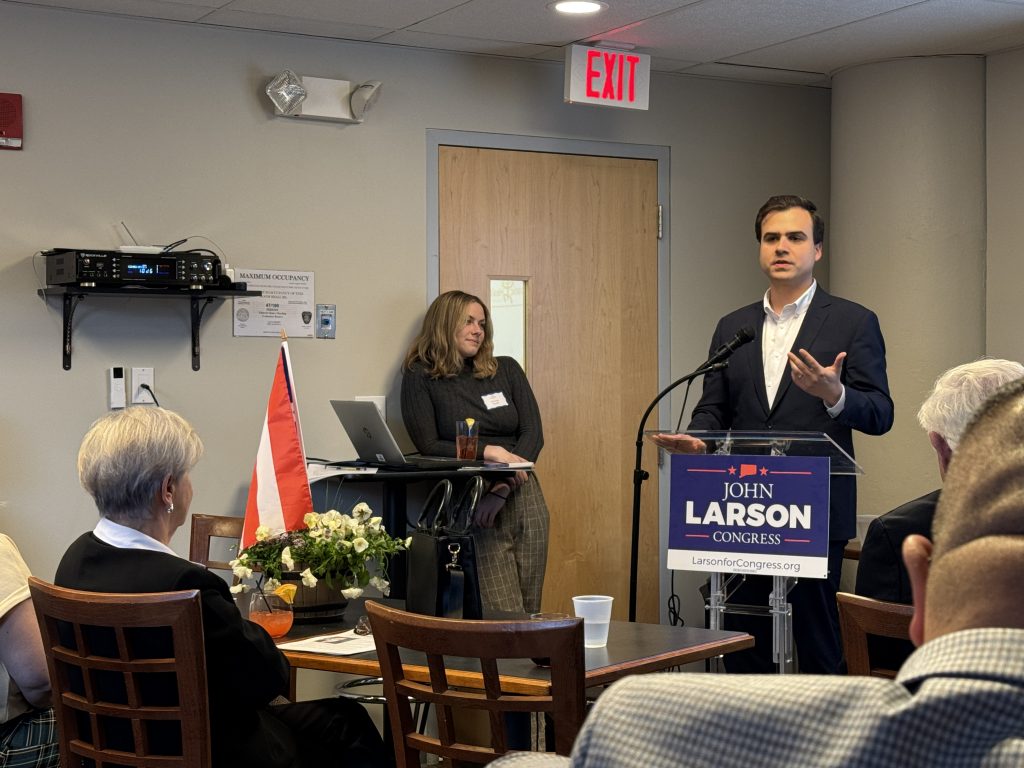
Director Charles R. Venator Santiago had a wonderful opportunity to join Puerto Rico’s Resident Commissioner Pablo José Hernandez Rivera, along with various members of the Connecticut General Assembly’s Puerto Rican and Latino Legislative Caucus, in an event for Federal Representative John Larson in Hartford, Connecticut. We look forward to future conversation and the opportunities to collaborate.

Representative John Larson stands at a clear podium speaking into a microphone in a small indoor event space, with an audience seated at tables in the foreground.

Labor History Archival Project

Contributed by Professor Charles R. Venator-Santiago. 

El Instituto|UConn Puerto Rican Studies Initiative is in the process of signing several memoranda of agreements with various institutions in the mainland and in Puerto Rico. The current batch of agreements is designed to support the rescue and preservation of Puerto Rico’s labor history. The UConnPRSI is now collaborating with the Iglesias Family Foundation to document the history of Santiago Iglesias Pantín, a key leader of the labor movement in Puerto Rico. We are also continuing to work with the Puerto Rico Archival Collaboration (PRAC) on a proposal to digitize the University of Puerto Rico (Humacao Campus) Centro de Documentación Obrera Santiago Iglesias Pantín (CDOSIP). Additionally, we are working with the University of Puerto Rico’s Instituto de Relaciones del Trabajo (IRT) to develop a local archive of labor agreements, documents and the oral histories of key historical labor leaders.

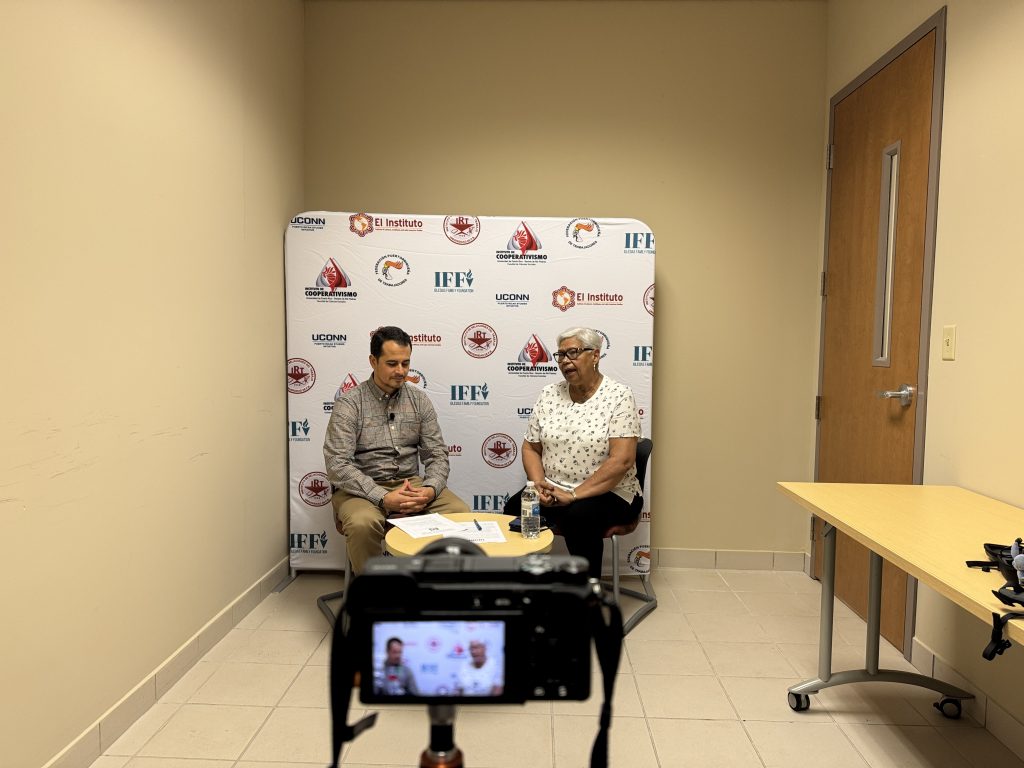
A camera on a tripod is positioned in the foreground, recording two seated adults in a small room. The two people sit on chairs facing the camera with a small round table between them holding papers, a pen, and a water bottle. Behind them is a step-and-repeat backdrop displaying multiple logos, including UConn, El Instituto, IFF, and Cooperativismo.

Recording Luisa Acevedo’s oral history with Professor Eduardo E. Matos Vidal, Director of the Instituto de Relaciones del Trabajo can be found in the Centro de Documentación Obrera Santiago Iglesias Pantín website.

Latino 8th Graders Visit UConn

Contributed by Professor Anne Gebelein. 

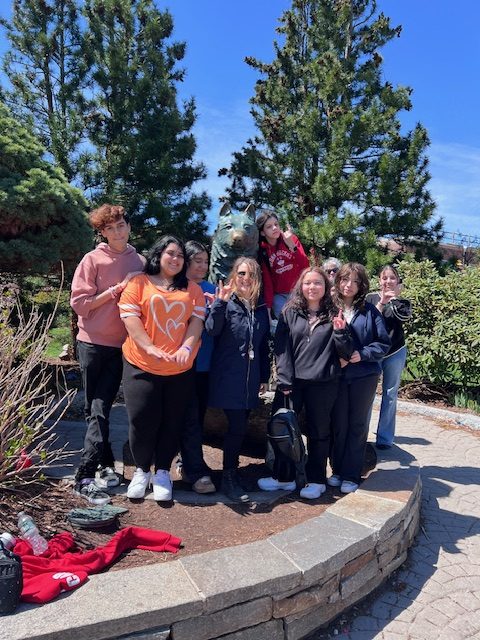
A group of approximately eight 8th graders stands together outdoors on a paved walkway next to Jonathan the Husky statue. The group is gathered closely, with several people in the front and others slightly behind.

El Instituto and LCI hosted the 8th graders of FAME Middle School of New Haven on Thursday, April 23, 2026. The Family Academy of Multilingual Exploration (FAME), situated in the heart of the Latino community of the city, promotes true bilingualism, rather than the standard CT model of transition to monolingualism. 43 Latino students and 4 teachers were welcomed by UConn LCI students, who engaged them in ice breakers outdoors before settling inside Werth classrooms for conversation. LCI and middle school students discussed course subjects, college life, and career options. Afterwards, UConn Tours showed FAME students campus highlights, including a visit to PRLACC, where students there shared the history of the Latino student center and the many clubs one could join here on campus. 

Students enjoyed sharing with and learning from each other, and FAME students were really surprised at just how big college campuses are, and how many options for growth UConn offers. As they are eligible for New Haven Promise scholarships granted to all graduating seniors, coming to UConn is a true option for these students. 

The day was the outcome of a visit that Professor Gebelein and UConn LLAS graduate Yadiel Rodriguez made to FAME school last November, to explore career options with approximately 100 7th and 8th graders. Rodriguez grew up in the FAME neighborhood, and is currently a guidance counselor for Middletown Schools. He motivated students through his own example of success and his UConn experience in LCI, El Instituto and PRLACC, as well as his masters degree in Educational Psychology. When the middle school asked to visit UConn campus to continue the conversation, Gebelein and Rodriguez collaborated with Catherina Villafuerte and Dr Nienhusser of LCI to plan the student exchange. Given its success, the collaboration may become a yearly pair of events.