Contributed by Adrian Chavarria
My original research question, which guided my summer research trip supported by the Elizabeth Mahan Fellowship, was: How did the city—the media, municipal government, and the constituency of the city of Comayagua—react to the military coup of April 22nd 1975? Was this reaction different to how it responded to the re-establishment of democratic order through the new constitution adopted by the National Congress on January 11, 1982? Did these particular entities celebrate, endorse, or protest these democratic changes? Having dedicated time to searching for documents in digitized archives and titles in university databases, and having consulted with staff familiar with the Museums in Comayagua and the municipal library, I was confident that there was information regarding these events only available there. I was right, I found two books that will be especially helpful in analyzing these events. The first book is titled Historia de Honduras (2005) written by Professor Guillermo Varela Osorio, the second one, Evolucion Historica de Honduras by Longino Becerra (2006). Together, they detail the military and civilian governments of the 1970s and the 1980s, their policies, and their oppositions, the military coup of 1975, and the passage of a new constitution in 1982.
There is one important detail that is not found in these titles: how municipal authorities in Comayagua, its citizens, or press reacted to these events. I consulted with staff at the Municipal Library, the Municipality’s Public Relations office, as well as historical museums without success. I found it astounding that the city with the best historical conservation efforts in the nation had not archived any of this information. I consulted with professors in the area and they all told me the same thing: historically, this had been a conservative city, there had not been protests or social movements. In fact, municipalities existed in subordinate positions to the national government and did not have the option to agree or disagree with its actions or policies, especially during the military rule period prior to 1982.
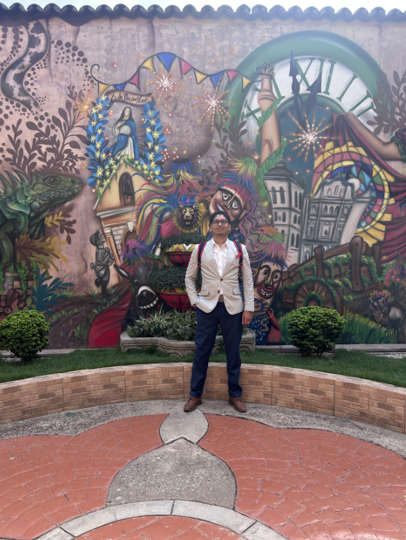
Until 1880 this was the capital of the country, but due to the city’s distance from the current capital and political activities, this time period is absent from the historical record. There are no public communications archived, a record of laws passed by the municipality during this time, newspapers, recorded protests or political actions by citizens, etc. It is almost as if these two events never occurred in the city. This has forced me to ask a different research question: To what extent did the cold war affect the Honduran political theatre between 1975 to 1985? I plan to explore this through the frameworks of democratic transition and human rights. To conclude, having to change my research question did not stop me from making the most out of the trip. I photographed information, historical monuments, 3D models and artifacts highlighting indigenous and colonial history and plan to make this available to future El Instituto students.