Contributed by Professor Anne Gebelein.
5 LLAS majors presented their 4994W capstone projects to the faculty on April 21st. Students focused on contemporary challenges to Latino and Latin American people’s well being, creating original research that included surveys, examination of government and international data, interviews, and critical comparative analysis. Faculty were impressed with the originality, thoroughness, methodological framing, and significance of the work for real-world applications. All 5 will graduate in May: Elena Bielesz, Ryan Rosario, Diego Reyes, Vivian Chavez, and Wendy Perez. They will be missed!
See below for the abstracts of their work.
Elena Bielesz
The Impact of Trump Administration Immigration Policies on Connecticut Schools and Families
Abstract/Description: Anti-immigrant rhetoric, policies, and practices, which have grown increasingly prevalent due to the current national political climate, have adverse effects on the mental health of immigrant families and the teachers that support them in Connecticut. This study seeks to represent the opinions of Connecticut K-12 MLL (Multilingual Learners) Education Teachers and Administrators whose daily lives are impacted by the anti-immigrant and anti-refugee policies and procedures. The study employed a human subjects-based approach supported by a review of related literature. MLL Educators from around the state of Connecticut were interviewed. These interviews found that while immigration-based trauma and stressors are common in students, families and educators throughout the state, representation, access to education, community solidarity and administrative support are vital to the positive development of immigrant student and family mental health. The study concluded that the development of statewide trauma-oriented and culturally informed training for teachers would decrease secondhand trauma and stress and allow educators to support their students in the best way possible.
Keywords: Multilingual Learners, Immigration Based Trauma, Second-hand trauma, United States Political Rhetoric, Immigration Policy, Trump Administration
Vivian Chavez
Barriers to Disclosure: Sexual Violence & Reporting Failures in Arizona’s Immigration Detention System
Abstract: Sexual VIolence is a prevelant and pressing issue within the United State’s immigration detention centers. My Thesis examines the underreporting of sexual violence within immigration detention centers, focusing on facilities in Arizona. Although there are federal policies like the Prison Rape Elimination Act (PREA), and resources ICE Detainee Handbooks in place establishing formal and legal protection for those in detention, this does not translate into safety and accountability. In my research I use a combination of official reports, PREA audits, ICE inspection documents, survivor testimony and advocacy research to better understand the gap between institutional claims of compliance and the lived experiences of detainees. My findings show that although detention centers maintain multiple channels of reporting and seem to demonstrate procedural compliance on paper, there are still a substantial amount of barriers which prevent survivors from safely disclosing abuse. These barriers include fear of retaliation and deportation, language and cultural obstacles, lack of trust in institutional processes and inconsistent or inadequate investigative practices. This demonstrates that the existence of legal protections and institutional policies does not translate into safety or justice for detainees. The gap between policy and lived experience shows that compliance alone is not enough. If there is no meaningful enforcement and survivor centered practice, sexual violence in immigration detention will remain underreported and inadequately adressed.
Keywords: Immigration Detention, Sexual Violence, Underreporting, Institutional Barriers,
Wendy Perez
Provider Decision-Making in Spanish Interpreter Use: An Evaluation of Current Practices
Abstract/Description:
This project aimed to demonstrate the importance of utilizing in-person interpreters, as an implemented best practice for a pediatric emergency room. This project evaluated current practices in an existing pediatric emergency room for interpretation services among attending providers. Using a qualitative study and qualitative initiative approach, a survey of nine open-ended questions was distributed to the pediatric emergency room attendings in this specific pediatric hospital. Results were obtained via REDCap, where providers discussed their preferences for modalities, ratings of current practices, discussion of training, understanding of culture versus language misunderstandings and more. While in-person interpretation remains a preference within the interpretation services being provided, there is an existent gap in how readily available it is to providers and how consistently it is implemented for communication. Further studies should be conducted for feedback on implementing any initiatives as a result of this study.
Keywords: language barrier, providers, attendings, rating, evaluating, in-person, compassion
Ryan Rosario
Selective Security: The Gendered Costs of El Salvador’s State of Exception
Since President Nayib Bukele’s March 2022 State of Exception, El Salvador has been hailed as a modern model of security achievement and a template for handling gang violence across Latin America and the United States. Yet this definition of success relies on a narrow view of public safety that centers male victims of street crime and prioritizes police patrols, mass arrests, and mass incarceration to drive down the general homicide rate. This thesis argues that, despite the reported decline in homicide, the State of Exception has not produced comparable reductions in femicide or intimate partner violence (IPV). This failure reflects a Salvadoran legal system shaped by deep-rooted paternalism that has not invested in diversionary and therapeutic responses for aggressors. Combining descriptive statistics on homicide and femicide from Salvadoran state institutions with an independent femicide series compiled by ORMUSA (Organización de Mujeres Salvadoreñas por la Paz) for the period 2020 to 2024, I compare the trajectories of general homicide and femicide rates before and after the March 2022 State of Exception. I contextualize these trends through an analysis of institutional bottlenecks in policing and courts, as well as a historical examination of mano dura policies and Cold War counterinsurgency. The data show that while reported overall homicide collapses after 2022, femicide declines only modestly, and NGO estimates remain above one femicide per 100,000 women, diverging from official reports. What emerges is that El Salvador’s security gains are structured by gender. These findings point toward a different model of security, one centered on diversionary and therapeutic alternatives to incarceration for aggressors, the establishment and enforcement of criminal protective orders, and a robust network of women’s shelters as core pillars of public safety.
Diego Reyes
Priced Out of Stability: Healthcare Costs and Economic Insecurity in America
This thesis considers how rising health care costs are impacting rates of medical debt and bankruptcy among middle and working class Latinos in CT. In particular, it questions how the Big Beautiful Bill (PL No. 119 – 21) has affected income distribution across middle-, upper-middle, and lower-income households in the U.S.. This research claims that this legislation is facilitating a hollowing out of the middle class; rather than stabilizing economic opportunity and increasing access to health insurance, these policies actively produce and deepen economic inequality, creating a “K-shaped economy” that pushes vulnerable Latinos in CT further into financial precarity.
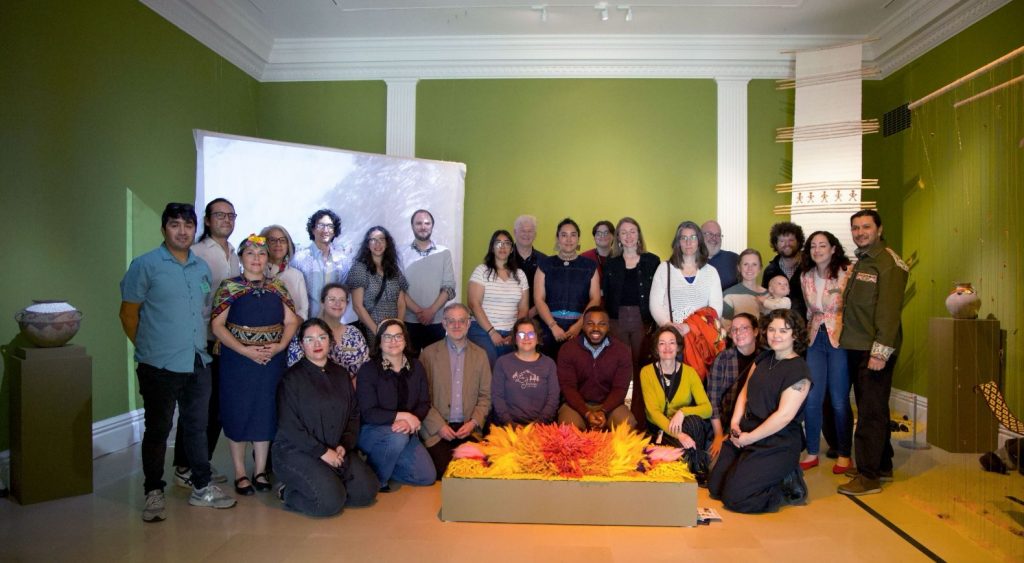
 young Guatemalan weaver with Maya ancestry living in Hartford, and Jeff Cán Xicay, Maya Kaqchikel weaver from Patzicía, Guatemala. The exhibition includes: a chañuntuko, a traditional Mapuche textile piece made especially for this occasion by master weaver Loreto Millalén. Millalén defines the chañuntuko as a portable territory—a textile used for horseback riding, traveling, sitting and resting, chatting, and sharing. This piece in this exhibition also represents the fire, a vital element that brings people together.
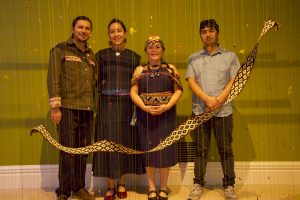 fabrics that bring them back to life. A collective piece “Hilos de los Rezos” made with threads that represent the transit of people in multiple dimensions from minche mapu (underworld) to wenu mapu (space above) made by Catalina Alvarado-Canuta, Francisco Huichaqueo, Loreto Millalén, and Pablo Millalén. Jeff Cay’s work Ojer Winäq (ancestral people in Kaqchikel language) is a textile piece created on a backstrap loom; it consists of a white fabric interwoven with reeds that serve as an internal structure, evoking a skeletal system that supports the body of the textile. At its center is a sequence of winäq (human figures), derived from the motifs of the Patzicía güipil,which represent the ancestors: grandfathers and grandmothers who are part of the community’s long history. In this sense, the piece is conceived as a spatial device that functions simultaneously as an altar and as a living presence. The fabric, suspended from above, descends like a white mist. This gesture refers to the community’s stories, where grandfathers and grandmothers manifest as mist, smoke, or incense: subtle forms of presence that inhabit and traverse the space. And finally, an ethnographic embroidery made by Catalina, who incorporated part of her fieldwork and personal experience into the work. This piece is still in progress and is signed with a needle with a red thread, the blood of Mapuche people, those who continue
  to write their history. This embroidery chooses to live with the projections of water, where it creates the shadows of the threads as another being. The exhibition has the presence ofthe kollon, a Mapuche ritual mask which represents protection and joy. The whole exhibition is accompanied by a Mapuche dance projected on the rocks. And finally, an ethnographic embroidery made by Catalina, who incorporated part of her fieldwork and personal experience into the work. This piece is still in progress and is signed with a needle with a red thread, the blood of Mapuche people, those who continue to write their history. This embroidery chooses to live with the projections of water, where it creates the shadows of the threads as another beings. The exhibition has the presence of the kollon, a Mapuche ritual mask which represents protection and joy. The whole exhibition is accompanied by a Mapuche dance projected on the rocks.
 personnel, and recruitment strategies across commodities, adapting quickly to law enforcement pressure. Women’s perceived harmlessness and social accessibility make them uniquely effective within these systems, particularly in roles that rely on emotional trust and relational proximity.
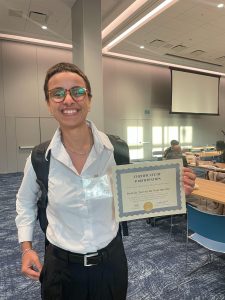 My experiences at the MACLAS 2026 conference and at “Cultures From Below” were both incredible, though in different ways. At the first, which took place at the University of PennWest, California campus, I must admit I was very tense and anxious, as it was my first time presenting at a conference in English and sharing this new research. Despite having sweaty hands, I leaned on my classroom experience, since I used to be a high school teacher. Because of that, I felt comfortable, as if I were teaching a class, moving around the space, explaining my research rather than just reading from slides. It went much better than I expected, especially for a first presentation.
 families who ignored us in public. Even their children knew not talk to us, as the “help” was not meant for friendship. Stark divisions followed me all throughout my education, reminding me that Latinos are viewed differently. Even popular culture taught me that Mexicans were meant for comic relief, giving my American peers permission to joke about “illegal Mexicans invading” their small town. Belonging was not about being an equal, but about playing the role of the subservient, disposable, and entertaining Mexican immigrant.
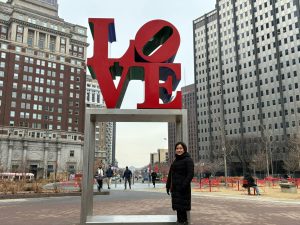 The Whetten Latin American Studies Fellowship Fund provided USD 655 in Fall 2025, which was used only for conference expenses. The funds covered round-trip transportation, three nights of lodging near the venue, student registration, and local transportation and meals. These expenses enabled full participation in conference sessions and professional events.