Departures

May 9, 2022

Contributed by Samuel Martinez 

With sadness but all best wishes for their next life chapters, El Instituto bids farewell to two outstanding UCONN Latinx faculty:

Self-portrait of Professor Linda Halgunseth smiling at the cameraLinda Halgunseth (Associate Professor HDFS/El Instituto) leaves UCONN for Michigan State University in the fall 2022, after two years on our core faculty. In her short time with El Instituto, Halgunseth not only developed a new advanced undergraduate course on The Latinx Family, but took on important upper-level administrative responsibilities as Director of Academic Affairs at UConn Hartford, while also maintaining an active program of research, publication, and conference presentations.
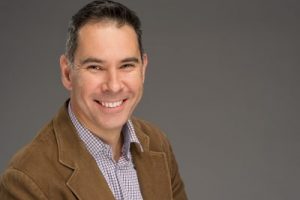


Jesús Ramos-Kittrell (Assistant Professor in Residence, Music) will begin a tenure-eligible assistant professorship at the University of Oregon in fall 2022, after five years at UCONN.Self-portrait of Professor Jesus Ramos-Kittrell smiling at the camera. An affiliate faculty member, frequently involved with El Instituto as an event organizer and attendee, Ramos published the contributory volume, Decentering the Nation: Music, Mexicanidad, and Globalization, during his time on the UCONN faculty, as well as winning the 2021 AAUP Teaching Innovation Award.
Linda and Jesús, we will miss you!

PRLACC 50th Anniversary

February 3, 2022

Contributed by Fany Hannon & Jennifer Morenus

A group of people stand in a hallway lined with displays and framed images on both walls. The left wall features a large, brightly colored timeline with photos and text. The individuals are arranged in a line facing the timeline, some wearing patterned or solid-colored formal clothing and most wearing face masks. The floor is reflective, and overhead track lighting illuminates the hallway. At the far end of the hall, a curtain partially covers a doorway.
Attendees react to the unveiling of the mural to commemorate the 50th anniversary of PRLACC on Dec. 10, 2021. (Kayla Simon/UConn Photo)

The Puerto Rican / Latin American Cultural Center (PRLACC) kicked off its 50th anniversary celebration on Dec. 10 by unveiling a mural with photos and artifacts on a wall leading to PRLACC’s location on the fourth floor of the Student Union.

PRLACC grew out of the rise of the United States civil rights movement in the late 1960s, when three students drafted and submitted a constitution to form a student organization, the Puerto Rican Student Movement.  The students — Carmen Castro ’73 (CLAS), Ana Isabel Lopez ’75 (CLAS), and Isnoel (Ino) Rios ’71 (CLAS) — intended to celebrate Puerto Rican history, culture, and literature and to recruit students to UConn. After months of protests and sit-ins at the president’s office, La Casa Borinqueña opened its doors to UConn community on Dec. 10, 1971.

“I wanted to showcase our history through a timeline to inspire our student by invoking their sense of pride in their heritage and culture,” says Jen Morenus, Assistant Director of PRLACC who led the mural project.  “We discovered stories of triumphs and finding solutions when faced with challenges and barriers. What has been a recurring theme of our story is how we have remained resilient and stayed focused on our core mission.”

The project began in June of 2021 with research conducted by Cassandra (Casey) Gonzalez ’22 MA, searched through the University archives to gather photos and stories.

“I would spend hours reading the stories of past students about their time here at UConn,” says Casey. “Each time I would find a ‘gem’ I would run back to Jen and Fany’s office so excitedly that I found more to put on the mural.  After months of running back and forth from the Dodd center and various meetings about what should be included in the mural, and many revisions by John (Bailey) our designer, we brought PRLACC’s mural to life.”

“As the daughter of two Mexican immigrants, this project was very personal and close to my heart.  My roots run deep through the Latinx experience at a predominately white institution.  It was heartwarming and bittersweet to view the experiences of other Latinx/Hispanic individuals at this University from many decades ago through their eyes, voices, and stories.”

Upcoming events as part of the 50th anniversary celebration:

  • Annual New England Latinx Student Leadership Conference, co-sponsored by NASPA Region 1, on March 25 – 26
  • Alumni Open House on April 9 at 3 pm (at PRLACC)
  • “Fresh Prince (alumni) Reunion” on April 9 at 7 pm (the Jorgensen Center)
  • Happy 50th Birthday Celebration PRLACC on April 24 at 1 pm (Student Union Ballroom)
  • Latin Fest on June 11 (the Jorgensen Center)

Please follow us on Instagram @uconnprlacc and YouTube for most up to date information.


El Instituto MA Student Co-authors Paper on Immigrants’ School Adjustment

February 2, 2022

UConn alum Oxana Sidorova and Neag faculty member Rebecca Campbell-Montalvo published a paper, in the American Education Research Association’s Open Forum journal, based on their research on health access assistance provided by school employees to Mexican and indigenous Guatemalan families.


Self-portrait of Professor Rebecca A. Campbell-Montalvo smiling at the camera
Rebecca A. Campbell-Montalvo, Postdoctoral Research Associate, Department of Curriculum and Instruction

Selfie of graduate student Oxana Sidorova outdoors sitting in front of a hillside covered with many fallen yellow leaves.
Oxana Sidorova, Alumni 21′


Recent Faculty Book: Katerina Gonzalez Seligmann’s Writing the Caribbean in Magazine Time

Contributed by Katerina Gonzalez Seligmann


In the Fall of 2021, Katerina Seligmann’s first book Writing the Caribbean in Magazine Time was published in the Critical Caribbean Studies Series at Rutgers University Press. To provide an overview of the book, Katerina draws on excerpts from the book’s introduction:

Writing the Caribbean in Magazine Time examines literary magazines generated during the 1940s that catapulted Caribbean literature into greater international circulation and contributedBook cover for Writing the Caribbean in Magazine Time by Katerina Gonzalez Seligmann. The background features a collage of pale green magazine clippings overlaid with vertical gray lines. The title appears in large, bold red text across the center, with the author’s name in smaller red text at the bottom. significantly to social, political, and aesthetic frameworks for decolonization, including Pan-Caribbean discourse. This book demonstrates the material, political, and aesthetic dimensions of Pan-Caribbean literary discourse in magazine texts by Suzanne and Aimé Césaire, Nicolás Guillén, José Lezama Lima, Alejo Carpentier, George Lamming, Derek Walcott and their contemporaries. Although local infrastructure for book production in the insular Caribbean was minimal throughout the twentieth century, books, largely produced abroad, have remained primary objects of inquiry for Caribbean intellectuals. The critical focus on books has obscured the canonical centrality of literary magazines to Caribbean literature, politics, and social theory. Up against the imperial Goliath of the global book industry, Caribbean literary magazines have waged a guerrilla pursuit for the terms of Caribbean representation.

This book tells the story of the Caribbean archipelago as a particular kind of choice for literary and political representation. In particular, this book excavates what choosing to write the Caribbean archipelago—or not—meant to the literary, social, and political transformations incubated by literary magazines during the 1940s. I examine the potent power of representing Caribbean locations in and around magazines, highlighting location strategies that increased the archipelago’s visibility and fomented regional unity in geopolitical and literary world systems. I interrogate how magazine editors, creative writers, and literary critics have deployed (and resisted) the Caribbean as a locus of enunciation for their work in Spanish, French, English, and creolized linguistic forms. In the literary, political, and cartographic archives probed by this book, the Caribbean—named as such or as las Antillas, les Antilles, or the West Indies—tends to evoke the archipelago as a decolonial horizon. The Caribbean as a region repeats itself as a creatively constructed location with purpose: to articulate a colonial record in common of racial and gendered violence that persists into the present, to imagine an anti-imperial (and in some cases anticapitalist) regional and planetary solidarity, and / or to offer political, social, and aesthetic alternatives to the hierarchies buttressed by imperial infrastructures.

During World War II literature produced abroad would circulate even less than usual in the Caribbean, and perhaps due to the resulting demand for reading material, literary magazines featuring many of the writers who would go on to become spotlights of Caribbean literature proliferated. Amid paper shortages brought on by the war and the disparaging of homegrown literature over foreign imports prevailing among middle-class reading audiences throughout the region, literary magazines contributed to uplifting locally and regionally produced literature, fomenting cultural capital for Caribbean literature and bolstering political transformations. As I argue throughout this book, literary magazines produced during the 1940s assembled and advanced the debates that structure many of the Caribbean’s political, social, and aesthetic trajectories until the present. This book thus highlights the centrality of the magazine form to the history of literature and politics in the region and examines the aesthetic and political strategies authors, editors, critics, and publishers used to imaginatively construct and circulate the Caribbean as a literary and geopolitical location.

The chapters of the book break down as follows:

  • Chapter 1, Location Writing in Magazine Time introduces the book’s framing vocabularies of “location writing,” “literary infrastructure” and “magazine time.”
  • Chapter 2, Locating a Poetics of Freedom in Tropiques proceeds by establishing location writing as a decolonial approach with literary, social, and (geo)political consequences. The sociopoetic theoretical works of the Césaires and Ménil offer an Afro-diasporic Antillean location in Tropiques. Location writing in Tropiques brings into view a potent decolonizing practice wherein the structure of desire is the poetic excavation of the layers of a colonial episteme that emerges upon posing the question “qui et quels nous sommes (who and which are we)?”
  • Chapter 3, Gaceta del Caribe Orígenes in Cuba: Black Aesthetics as Battleground, challenges the supposition that Caribbean-located writing would be a necessary or obvious approach for a literary magazine. I demonstrate how locating the Caribbean in Gaceta del Caribe works both to enunciate anti-imperial solidarity with the region and position the magazine through the reclamation of an Afro-diasporic position. In both direct and indirect opposition to Gaceta del Caribe, I argue that Orígenes included hemispheric-, Atlantic-, and Havana- centered forms of location writing without consolidating a location for itself outside the dislocated realm of literary practice that it prioritizes. The implications of this move would be to unseat the Afro-diasporic location of Cuba’s literary and social image that Gaceta del Caribe promoted.
  • As I examine in chapter 4, Bim Becomes West Indian, Bim would feature fictional location writing that set the tone for regional literature as a predominantly anticolonial practice. At the same time, this literary work would be predominantly about how the region has been produced as colonial, so that anticolonial critique, rather than nationalism, would comprise the primary paradigm it offered.
  • Chapter 5, Polycentric Maps of Literary Worldmaking, offers a theoretical approach to location writing as central to the medium of the literary magazine in comparison to the medium of the map, arguing for the Caribbean literary magazine as a cartographic technology. In this chapter I add that this set of Caribbean magazines construct locations in explicitly literary ways and offer polycentric maps that reconfigure world literary space.

Collective Action for Social and Migrant Justice in the Borderlands

February 1, 2022

May Session 2022 Study in Arizona

From May 19 to May 29th,  Anne Gebelein will be piloting a new Global Experiential Learning program in Tucson, Arizona. A partnership between El Instituto, the Human Rights Institute, the School of Social Work and the non-profit organization Borderlinks of Tucson, the program will take students to the US/Mexican border region to learn from and collaborate with organizations that participate in collective action to address human rights concerns. Students will earn 3 credits while learning how ordinary citizens on both sides of the border have worked for justice for immigrants and border residents. Students will reflect on how national policy and international trends affect border communities, the root causes of migration, femicide, border militarization and its consequences, theA vertical promotional flyer titled “Collective Action for Social and Migrant Justice in the Borderlands.” At the top is a hexagon-shaped photo of a desert landscape with cactus plants and mountains in the distance. Below the image, the flyer text reads: “3 credits • 3 weeks • Tucson, AZ.” Additional text explains the program: “WORK with community organizations for collective action. GAIN an intimate understanding of the challenges faced by border dwellers and border crosses. EXPAND students’ thinking about borders that exist geographically but also socially.” At the bottom is a dark blue box with white text that says: “For additional information contact Anne.Gebelein@uconn.edu.” The flyer uses blue and white geometric design elements along the top and sides. history of the sanctuary movement, and the unique needs of asylum seekers and child migrants.

The deadline to apply is February 15th, so please encourage students you think would benefit to apply now through the Study Abroad website. The cost is approximately 3000$ for the 3-credit experience + a plane ticket.

Contributed by Anne Gebelein

DCF – El Instituto Partnership

Contributed by Anne Gebelein 

Selfie of graduate student Diana Velasco with her hands folded on her face smiling at the camera.
Diana Velasco, MA

First year Masters student Diana Velasco is leading a new partnership between the Department of Children and Families and El Instituto. This semester, Diana will be interning with DCF’s immigration attorney Jennifer Avenia to develop a database of agencies, non-profit and volunteer organizations throughout the state who support mixed-status and undocumented families in CT. The DCF policy is to serve all children in need in our state, and they have seen an increase in unaccompanied and undocumented children in their care. Diana will be guiding students in Anne Gebelein’s LLAS 2012: Latino CT class to research local agencies and interview staff to accurately map out what agencies are helping our most vulnerable and in what specific ways. By late spring with the help of LLAS students, Diana hopes to have an updated and accurate network of providers that DCF workers and teachers can use for referrals.

Pauline Batista at the UNESCO Luanda Biennale

Contributed by Pauline Batista 

Between November 27and December 2, 2021, I participated in the Biennale of Luanda as a UNESCO Youth Representative. The Government of Angola hosted the event organized by UNESCO and supported by the African Union. In partnership with the Pan African Youth Network for Culture of Peace (PAYNCOP), UNESCO initially selected 118 youth from African countries and the Diaspora. I was in complete shockA group of six people stand together indoors, posing for a photo near a glass staircase and reflective floor. All six wear colorful headwraps. Four of them wear white T‑shirts with a multicolored circular logo on the front, Pauline Batista wears a white outfit with an orange lanyard, and another wears a skirt made of long, woven strands. The group stands close together, smiling at the camera. when I learned that I was one among six youth chosen to fly to Luanda by presidential invitation of the Government of Angola to be in direct discussion with Heads of state from various countries, including Portugal (Marcelo Rebelo de Sousa/ present on remarks link) and Costa Rica (Epsy Campbell Barr/ photo attached). I was the only representative of the Diaspora. The joy of being the sole representative across so many stellar candidates truly humbled me. There were students from all over the world and selected participants from US ivy league universities. And most importantly, the research work that caught their attention was my work that is somewhat critical of UNESCO and how countries from the Global South engage with UNESCO conventions and its standards. You can check out my opening remarks at the Biennale of Luanda’s Intergenerational Dialogue session with Heads of state on YouTube.


I am fortunate to have had El Instituto on my side from the very beginning of my journey as a graduate student. The faculty and staff of El Instituto encouraged me to learn what I needed to become a doctoral student. And thanks to that unconditional support, I am a passionate researcher who collaborates with youth in UNESCO Heritage sites to get the attention of policymakers through Participatory Video and other Participatory Action initiatives. The work started in LLAS 5000, a mandatory course for MA students at El Instituto. While in Luanda, I asked the President of Portugal, “How is it that we turn conflict into dialogue at a transnational level?”- a complex question. After my question, President Marcelo Rebelo de Sousa stepped down from the podium and gave me the warmest hug. 

I am an Afro-Brazilian raised in a UNESCO Heritage site. I grew up with many questions that the academy has been helping me address inPauline Batista stands indoors on a red carpet in front of a backdrop displaying event logos, including one for UNESCO. The person is wearing a light-colored outfit with a scarf and an event lanyard, and is positioned slightly to the right of a colorful circular design on the backdrop. collaboration with youth (and their new questions). The more I work with youth, the more I realize that academic work in its nature may feel isolating, but it is collective. I am content that I was in dialogue with presidents. Still, the most meaningful part of my journey was to work directly with Angolan youth who do work about heritage, education, and human rights through art. I saw myself a lot in working with them. More than ever, it is time we think of the academy as a place of collective knowledge creation and attribution because if research is not for the benefit of people, why bother? I learned during lessons during my short time in Angola; the first one is that there are many Africas even within Angola. But the biggest one was how we must be careful in the work we do because folks are listening, and most importantly, we owe youth better. To me, being a UNESCO Youth representative became the responsibility to listen to learn how to do better. I am happy to keep the conversation going. You can find me at pauline.batista@uconn.edu or on Instagram: @paulinefrombrazil

Latinos working for inclusion at School of Engineering

January 31, 2022

Santos and Paricio Advance Inclusion at the School of Engineering

In the summer of  2021, Dr. Stephany Santos was appointed the inaugural Executive Associate Director of the Vergnano Institute for Inclusion in UCONN’s School of Engineering. Santos holds Bachelor’s, master’s, and Doctoral degrees in Biomedical Engineering from UCONN as well as an M.S. Mechanical Engineering from the Politecnico di Milano in Italy. During her tiSelf-portrait of Stephany Santos smiling at the camera-me as a Ph.D. student, Stephany was an EAGLES Fellow, an NSF GK-12 Fellow, an NSF ACADEME Fellow, a CU Boulder ACTIVE Faculty Development and Leadership Fellow, an Outstanding Multicultural Scholar/Crandall- Cordero Fellow, and won a prestigious Ford Foundation Fellowship from the National Academies. Additionally, she was the inaugural recipient of the Inspiring STEM Equitability Award and a Woman of Innovation by the Connecticut Technology Council. Stephany has presented on her work in diversity and outreach in numerous national forums and has contributed as a team member or collaborator on numerous NSF-funded research studies on diversity and outreach topics.


A second recent hire working to improve inclusion in the School of Engineering is the Krenicki Arts and Engineering Institute’s Co-Director, Dr. Jorge Paricio Garcia. The Krenicki Institute wasSelf-portrait of Professor Jorge Paricio Garcia established with a major gift to UCONN by John and Donna Krenicki, with the aim of establishing an innovative interdisciplinary curriculum in areas like entertainment engineering and industrial design. Paricio received his bachelor’s degree from the Complutense University of Madrid, followed by a master’s in industrial design from the Pratt Institute and a PhD from the Complutense University, with a dissertation on Freehand Drawing in Industrial Design. He taught at the Rhode Island School of Design, Ohio University, The Art Institute of Pittsburgh, The Art Institute of Colorado, Pratt Institute and Parsons School of Design. He has practiced product design and exhibit design in New York City, Denver and Madrid, Spain, and has helped write patents and developed concepts for Colgate Palmolive among other companies. He has written two books, Perspective Sketching and Hybrid Drawing Techniques for Interior Design.


“Words like ‘inclusion’,” says Paricio, “which in past times might have escaped the post-secondary educational system, now are key elements that guide new curricula.” That concern with inclusion is reflected in the new coming multidisciplinary degrees in engineering (MDE) at UConn, which will offer courses such as Asian Theater and Performance, African American Theater and Latinx Theater, among others. The Vergnano Institute has pledged its support in one of the new classes, Multicultural Design and Diversity, in the industrial design specialization in MDE. The emphasis throughout the new curriculum is on complementing technical mastery with the soft skills that engineering students need to master, to design gender-inclusive products, or offer services or experiences that cater to a wider cast of users and including minority groups.


In the summer of 2021, Paricio consulted with El Instituto’s Director, Samuel Martínez, in preparing a report that set forward a need for a more inclusive environment, aiming especially at bringing in more first-generation, and lower-income (FiGLI) Latinx students and helping them succeed in its sponsored programs, and many other STEM programs at UConn. While undergraduate Engineering students are approximately 11% Latina/o/x, that enrolment figure drops to  a slim 4% in Graduate Engineering programs. The Vergnano and Krenicki initiatives seek to raise that student of color percentage in Graduate studies, with the help of internal and external funding opportunities for scholarships, possibly including bridge and exchange programs with Hispanic Serving Institutions, and with other programs created in conjunction with El Instituto. With a more solid platform of support, more graduate students of color will flourish in UCONN Engineering and ultimately make meaningful contributions at their places of work, in their communities and in society at large.


Contributed by Prof. Jorge Paricio, PhD