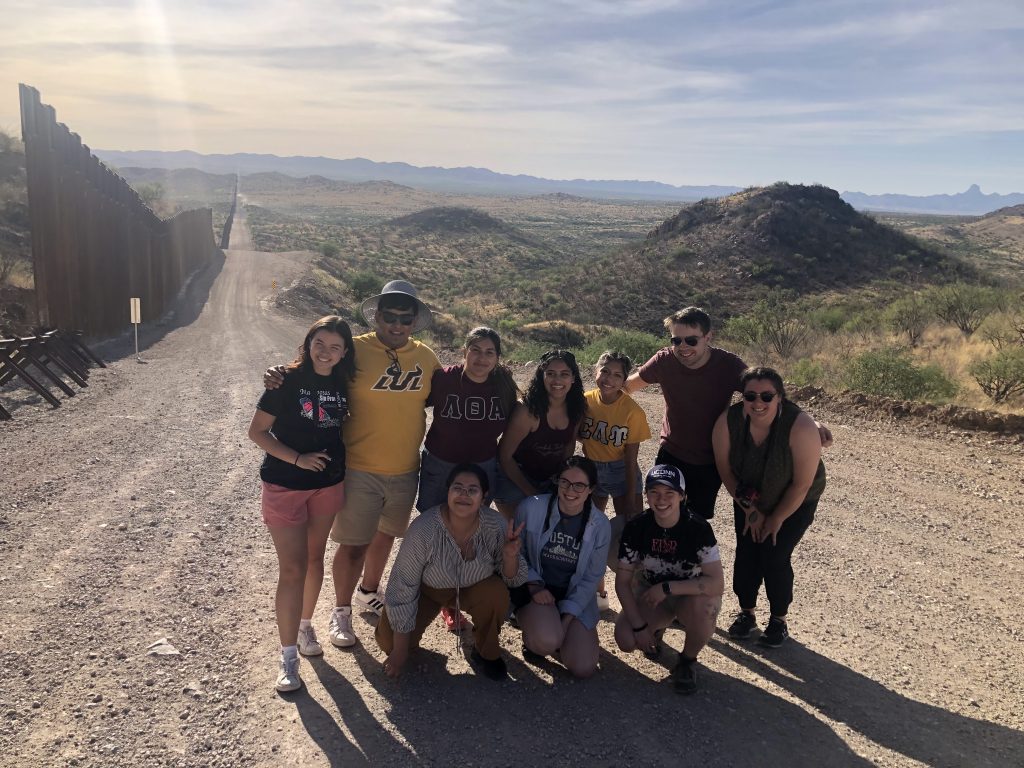
Contributed by Anne Gebelein
Students Travel to the U.S./Mexico Border to Learn about Collective Action for Social and Immigrant Justice
From May 19-May 29th, 10 students joined Professor Anne Gebelein at the border to learn more about the network of activist groups that organize to support the rights of both immigrants and border residents. Tucson AZ is a special place in which to study organizing, as it hosts a wide, interconnected network of agencies and citizen advocacy groups that work collaboratively to promote the rights of all peoples in the region. The program was hosted by Borderlinks, an educational non-profit born in the 1980s to contextualize the sanctuary movement started by the First Presbyterian Church. Church members protected asylum seekers escaping U.S.-backed torture in Central America, and their movement became a nationwide phenomenon, as over 500 churches ultimately housed vulnerable migrants and paved the way for current sanctuary church practices.
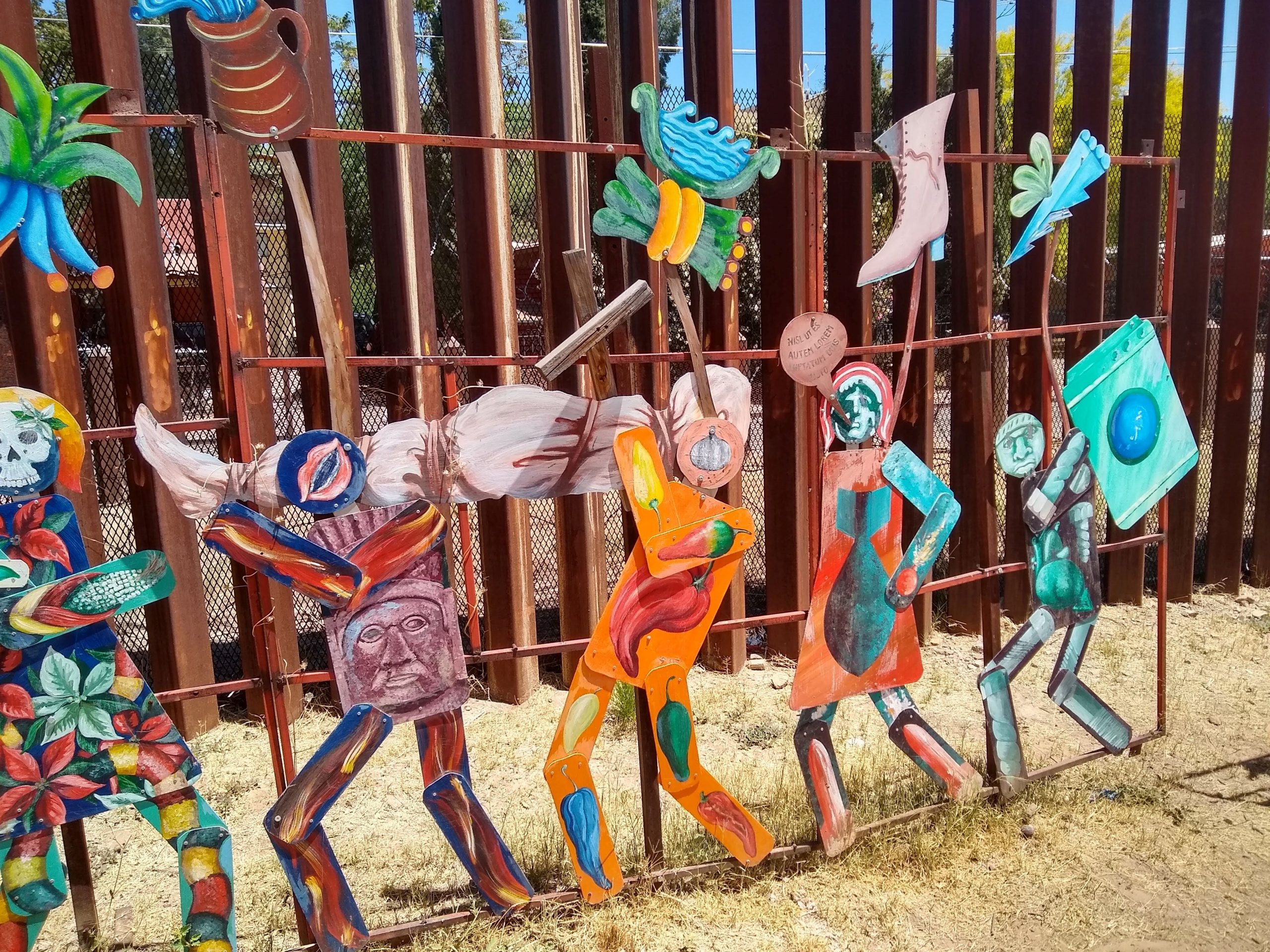 Students met with activists, traveled to 2 border towns in Mexico, spent time at the border wall, participated in workshops hosted by Borderlinks, and listened to UConn faculty experts lecture about border issues via webex. They hiked in the desert, placed water for people in danger of dehydration, attended a mariachi mass, and visited a migrant shelter. Students examined intersections of immigration, gender identity, asylum, collective action and art. They also had time to explore Tucson, a vibrant city with a rich artistic tradition influenced by Mexican muralism and tilework. Students earned 3 credits in LLAS or HRTS from participating in the program and course, which was designed by many hands: Anne Gebelein, Mark Overmyer-Velazquez, Kathryn Libal, Megan Berthold and Rodolfo Fernandez. Professor Fernandez will run the course from May 18th-28th in 2023.