Painting the U.S./Mexico Border Event

Contributed by Anne Gebelein 
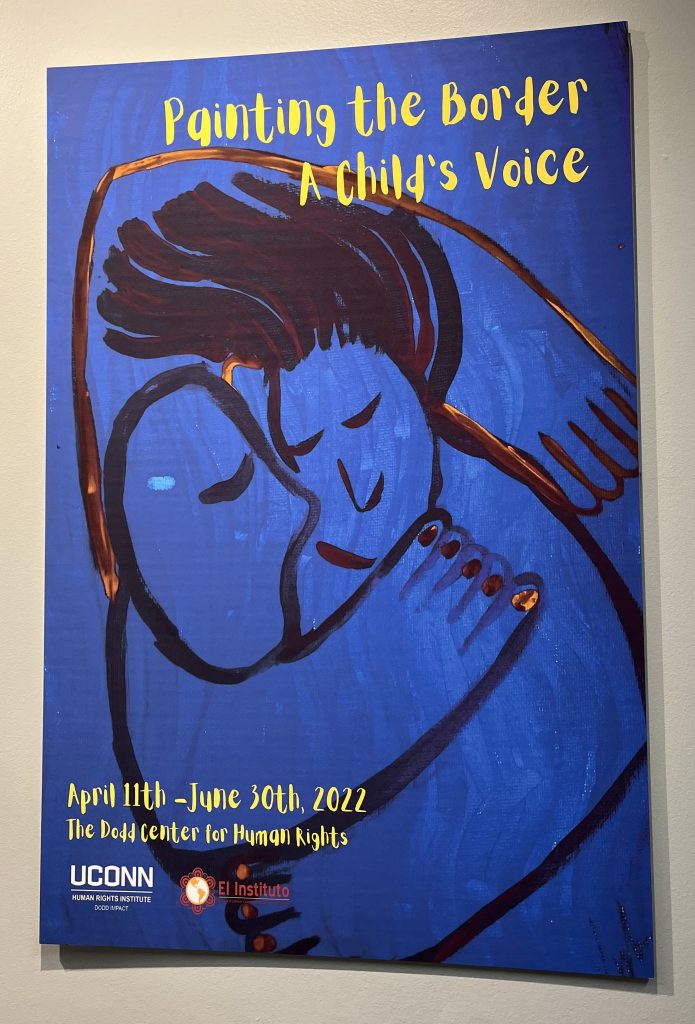
Event poster with a blue background features an abstract illustration of two human figures embracing, drawn with sweeping dark blue and brown lines. The figures’ heads touch gently, and the shapes blend together in a stylized, expressive way. At the top, yellow handwritten-style text reads, “Painting the Border – A Child’s Voice.” At the bottom, similar yellow text states, “April 11th – June 30th, 2022, The Dodd Center for Human Rights.” Logos for UConn Human Rights Institute and El Instituto appear in the lower left corner.

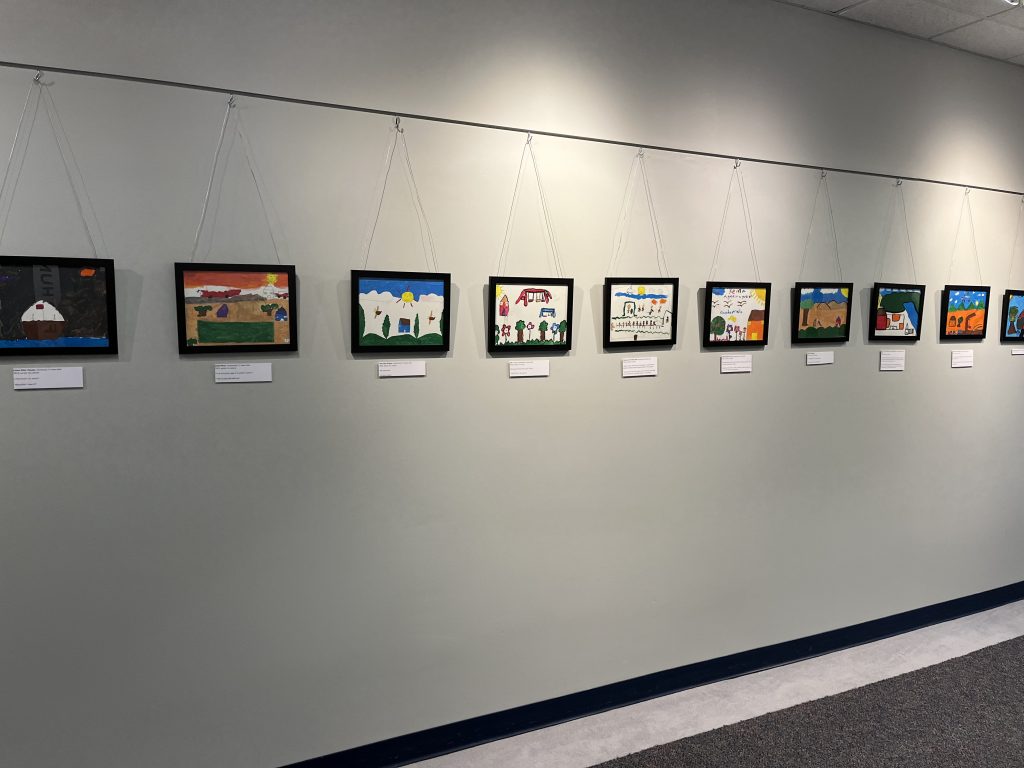
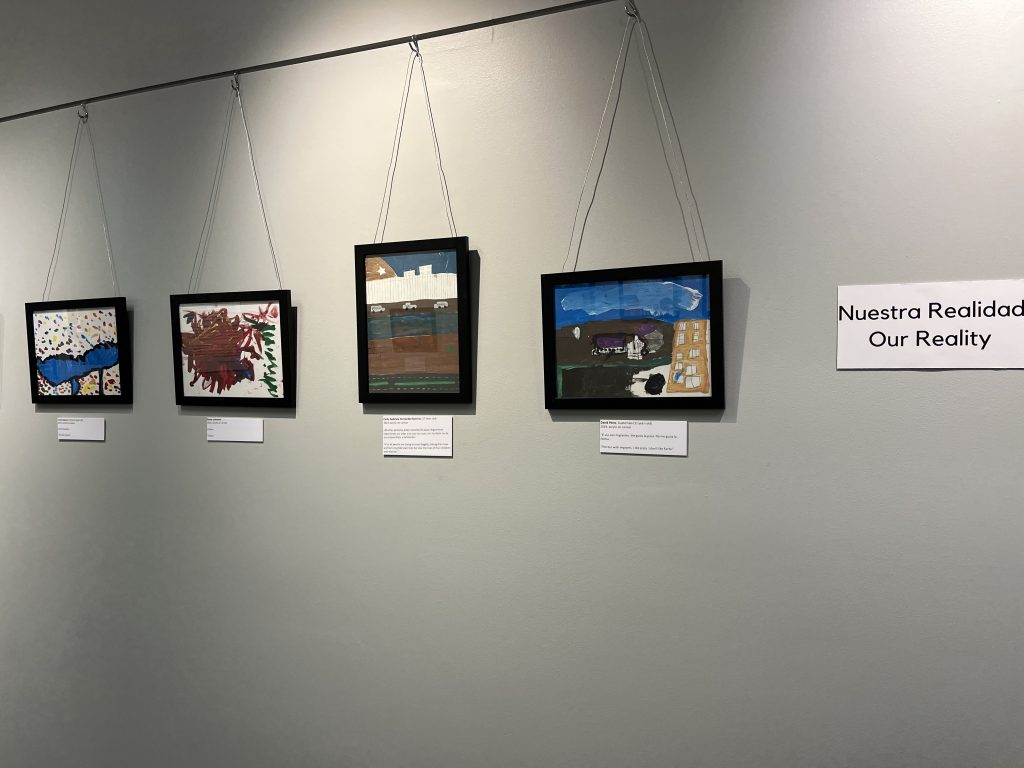
On Monday April 11th, Dodd Impact, El Instituto, and the Human Rights Institute, in collaboration with Skidmore College, celebrated the opening of an exhibit on children’s art created in the MPP camp of Ciudad Juarez, Mexico. The exhibit “Painting the Border” will be in the Dodd Center until the end of June.

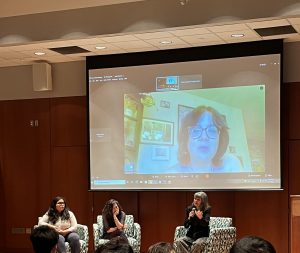
To mark the opening of the exhibit, a panel of faculty and activists discussed the current situation of children in refugee camps created by the United States’ “Remain in Mexico” policy, as well as pressing concerns of youth who have arrived in CT. The panel “Youth Seeking Refuge: U.S. Immigration Policy, Mobility Justice and Human Rights” included speakers Dr Diana Barnes ofA panel discussion takes place in an auditorium. Three individuals sit on patterned armchairs on a stage in front of an audience. Behind them, a large projection screen displays a video call showing another individual participating virtually, appearing in a room with framed artwork on the wall.  Skidmore College, who created the exhibit; Dr Anne Gebelein of El Instituto; Katia Daley, Healthcare Campaign Organizer for CT Students for a Dream; and Lucero Claudia De Alva Fernandez, industrial engineer, business owner, and the lead creator and organizer of a 9-shelter school system for 484 migrant youth in Ciudad Juarez.
Panelists discussed the many consequences of the closing of the border under Title 42, from foreign nationals not being allowed to exercise their right to request asylum; to a buildup of people seeking entry since 2019; to gangs making fortunes from charging tolls to cross their territory, from kidnapping and extortion, and from human trafficking and slavery. Citizens in Ciudad Juarez worked hard to convert 24 unoccupied buildings into shelters to bring families off the streets in one of the most dangerous cities in the hemisphere, and to create a school system in which to give primarily Central American children some sense of normalcy. Even so, the pictures these children painted in an art workshop reveal anxiety about leaving their homes and traumas in confronting additional violence in their journeys to our border.
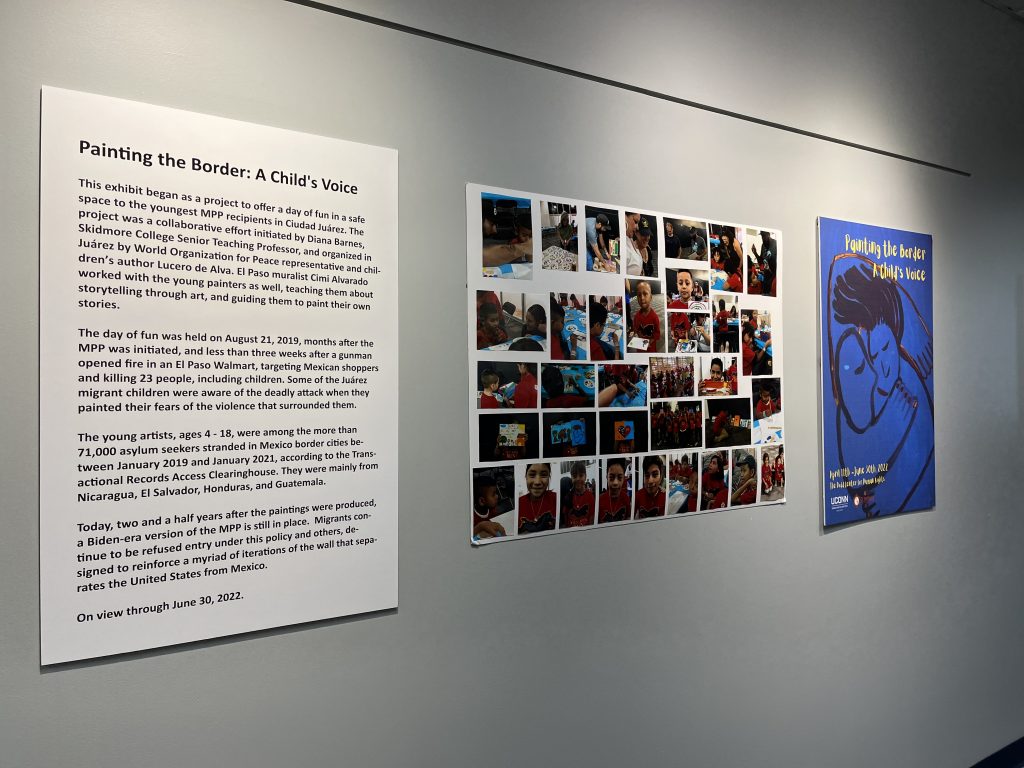


A gallery wall displays three pieces related to the exhibit “Painting the Border: A Child’s Voice.” On the left is a large white text panel explaining the exhibit’s background, including information about migrant families, the project’s creation, and its timeline. In the center is a collage made up of many small photographs arranged in a grid, showing children participating in an art activity; the images include close‑up portraits and children holding or creating artwork. On the right is a blue poster featuring an abstract illustration of two figures embracing, with yellow text that reads “Painting the Border: A Child’s Voice,” and exhibit dates listed as April 11th–June 30th, 2022. All three pieces are mounted on a smooth gray wall in a well‑lit hallway or gallery space. A long gallery wall displays a row of children’s framed drawings, each hung by two thin wires attached to hooks near the ceiling. There are eleven framed artworks visible, spaced evenly across the light gray wall. Each drawing features bright colors and simple figures, depicting scenes such as houses, people, landscapes, and animals. Below each frame is a small white label mounted to the wall. A gallery wall displays four framed children’s artworks hung in a row using thin wires attached to a rail near the ceiling. Each painting features bold colors and simple shapes. From left to right: the first artwork shows a blue river with multicolored dots above it; the second features layered red and brown brushstrokes with small figures and shapes; the third depicts a landscape with a body of water, brown ground, and light-colored buildings or structures in the background; the fourth shows a scene with dark hills, a building, and a tan structure on the right. Each frame has a small white label mounted directly below it. On the far right of the wall is a printed sign that reads, “Nuestra Realidad / Our Reality.” The wall is painted a light gray and the space is evenly lit from above.