Read more about Cardona’s life story on the Hartford Courant website.
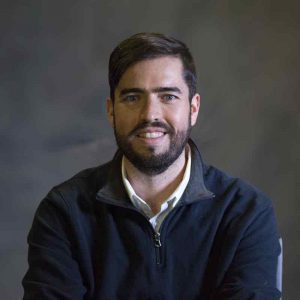
Biden Picks UConn School of Ed Grad, Miguel Cardona, to be US Secretary of Education
December 23, 2020
December 23, 2020
Read more about Cardona’s life story on the Hartford Courant website.
December 16, 2020
For Scott Wallace, remote learning means getting off the beaten path. Read the full article from the UConn Magazine website.
October 20, 2020
Latinx and Latin American Studies MA graduates, Pauline Batista and Lauren Pérez-Bonilla (now doctoral students in UCONN Geography and Education, respectively), together with History doctoral student Claudio Daflon, have been awarded an Initiative on Campus Dialogs (ICD) Fellowship to develop a year-long project, “Vamos!” Vamos! seeks to gather UConn’s growing Latinx population within a space where Afro Latinx, Queer Latinx, and other underrepresented Latinx populations can lead conversations around too-often sidelined Latinx identity-related issues. All students are welcome to attend their meetings. The group will meet biweekly (virtually or at available campus spaces such as Cultural Centers in the Fall 2021). Drawing guidance from Paulo Freire’s (1994) participatory action framework, Vamos! aims to promote student-centered conversations, in partnership with various student-led organizations on campus. The project will also bring a guest artist or speaker from abroad by the end of the semester. Email Siara Maldonado (siara.maldonado@uconn.edu) for information on meeting places and times.
You can read more information about the Fellowship Program on the Human Rights website.
October 16, 2020
A recent story in UConn Today featured research on Latinx Huskies’ experiences at UConn and after college. The project was led by Brianna Chance (SFA ’23), La Comunidad student and vocal performance (Music) major, with the guidance of founding Comunidad Director and Communication and El Instituto core faculty member, Diana Rios.
Together with UConn faculty Professor Manuela Wagner (LCL), Assistant Professor Aarti Bellara (EPSY), Neag School of Education Associate Professor have worked alongside Instituto affiliate faculty member Elizabeth Howard who has won a $179,000 grant from the US Department of Education for a three-year research project, “Reimagining Dual Language Education: Promoting Equitable Bilingualism and Biliteracy Outcomes through a Focus on Sociocultural Competence.” This 3-year project seeks to address the issue of how best to promote the development of sociocultural competence (SCC) in public schools. Working through a collaborative social design-based experiment, jointly conducted by university researchers together with dual language classroom teachers, the project has four major goals: 1) improve the equitable bilingualism and biliteracy attainment of all dual language students through a greater focus on SCC, 2) improve the measurement of SCC, 3) foster SCC among dual language students, and 4) enhance dual language teachers’ professional competence related to SCC-focused language and literacy instruction. To accomplish these goals, university researchers and participating DL teachers will engage in a professional learning community, in which they will develop and implement instructional approaches designed to promote SCC development.
October 9, 2020
Rise Of The Latino Vote was held on October 7, 2020 through Facebook live at 7pm.
For more information about the event, please visit the Daily Campus website.
The Office of the Vice President for Research (OVPR) announced the award of five Scholarship and Collaboration in Humanities and Arts Research (SCHARP) Program grants, including the following grants won by affiliates of El Instituto:
SCHARP Breakthrough Award – $50,000
Mark Healey, Department of History
Bibliohack Plus: An Integrated, Low Cost, Open Source Digitization Tool Kit and Workflow for the Global South and Underserved Areas
Co-PIs: Tom Scheinfeldt, Digital Media and Design; Greg Colati, UConn Library; Michael Kemezis, UConn Library
SCHARP Development Awards – $8,000
Cesar Abadia-Barrero, Department of Anthropology
Healing the Land to Attain Peace: A Community-Based Art Project in Rural Colombia.
Co-PIs: Camilo Ruiz-Sanchez, Adriana Katzew
Ariel Lambe, Department of History
Living in the Monster: Cuban Exiles in the United States, 1920–1952
October 8, 2020
2015 UConn Political Science PhD, Juhem Navarro-Rivera has published a report, Reshaping American Politics: The 2020 Secular Voices Survey, for Socioanalitica Research. The report examines the political beliefs and behavior of Americans who identify as atheist, agnostic, or simply nonreligious. You can read the Sociolanalitica report in the Socioanalitica research webiste.
September 2, 2020
Please visit UConn Today for the full article.
August 10, 2020
 Love, Life & the Virus, a documentary film by Oscar Guerra, Assistant Professor of Digital Media Design at UConn’s Stamford campus, will air nationally on the acclaimed PBS in-depth journalism program, Frontline, Tuesday, 11 August, 10PM.
The film follows the struggle for survival of two immigrant families struck by COVID-19 infections in southwestern Connecticut. A Spanish-language version of the film will air a week later on air on Univision’s acclaimed news magazine program Aquí y Ahora on Sun., Aug. 16 at 7PM.’