Contributed by Graduate Student Beatriz Torres Do Nascimento
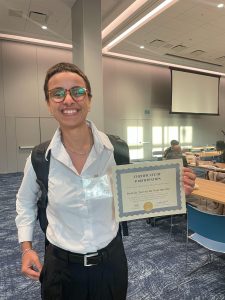 My experiences at the MACLAS 2026 conference and at “Cultures From Below” were both incredible, though in different ways. At the first, which took place at the University of PennWest, California campus, I must admit I was very tense and anxious, as it was my first time presenting at a conference in English and sharing this new research. Despite having sweaty hands, I leaned on my classroom experience, since I used to be a high school teacher. Because of that, I felt comfortable, as if I were teaching a class, moving around the space, explaining my research rather than just reading from slides. It went much better than I expected, especially for a first presentation.
When I finished, there were many questions about my research. The audience showed strong interest in my topic, and I also received very valuable feedback, which I wrote down so I can pay closer attention to certain methodological details. Beyond the feedback and the clear interest from the audience, MACLAS 2026 was also great for networking. Through these connections, I was encouraged to apply for a prize that the conference will award for the best graduate student research. In addition, I met the editor of a journal, who also encouraged me to try to publish my work. I felt very empowered and personally encouraged, which motivated me to carry out a strong research project over the summer so that I can write a solid paper. Beyond my individual achievements, at MACLAS I also met a contact who could potentially become a collaborator with the Puerto Rican Studies Initiative (PRSI), since they also work on Puerto Rico. I was very happy to make a connection that could benefit PRSI as well.
At the Emory University conference, my experience was different, but equally incredible. Since it was a conference organized by and for graduate students, I felt more at ease and even made a few friendships that I will carry beyond the conference. I also received important feedback there. However, because there were more specialists in Brazilian studies, I felt that much of what I presented was less new to the audience than it had been at the other conference.
Overall, these were two wonderful experiences that truly empowered me. I am very grateful to El Instituto (ELIN) for their support. Sharing my research at these conferences gave me even more certainty that there is a gap in Brazilian studies that I am on my way to helping fill, at least in part.